
Last Updated: October 26, 2026
Quick Summary
What is clinical oversight in home care is the process of supervisory care activities performed by registered nurses to ensure quality, safety, and proper delivery of patient care in the home setting. The RN oversees caregivers, creates care plans, trains staff, and checks in regularly to maintain standards and prevent gaps in care.
- Clinical oversight involves an RN monitoring caregivers, providing guidance, and maintaining accountability for delegated nursing tasks.
- RN delegation allows trained caregivers to perform specific nursing tasks under nurse supervision and accountability.
- A nursing care plan is a written roadmap outlining health needs, caregiver actions, warning signs, and care goals.
- Clinical oversight is especially critical during the first weeks after hospital discharge when readmission risk is highest.
- Post-discharge coordinated oversight reduces complications and helps seniors recover faster according to transitional care research.
Table of Contents
- Understanding Clinical Oversight in Home Care
- Why Clinical Oversight Matters for Your Loved One
- RN Delegation in Home Care: How Nurses Guide Caregivers
- Developing a Home Care Nursing Care Plan
- Clinical Oversight After Hospital Discharge
- Recognizing Signs a Senior’s Care Plan Needs Updating
- Starting Clinical Oversight for Your Home Care Needs
- Frequently Asked Questions
Understanding Clinical Oversight in Home Care
Understanding what is clinical oversight in home care means recognizing it as the process of supervisory care activities performed by registered nurses to ensure quality, safety, and proper delivery of patient care in the home setting. According to research in clinical care management, clinical oversight involves monitoring, guidance, and accountability to maintain standards of care when caregivers assist with delegated nursing tasks.
In practice, this means a registered nurse (RN) oversees the work of home care aides and other caregivers. The nurse doesn’t necessarily provide hands-on care every day. Instead, she creates a care plan, trains caregivers on how to follow it, and checks in regularly to make sure everything is working as intended.
At Care Crew LLC, we help families understand that clinical oversight isn’t about surveillance. It’s about safety. When your loved one has complex medical needs, having an RN coordinate their care prevents gaps, catches problems early, and gives everyone peace of mind.
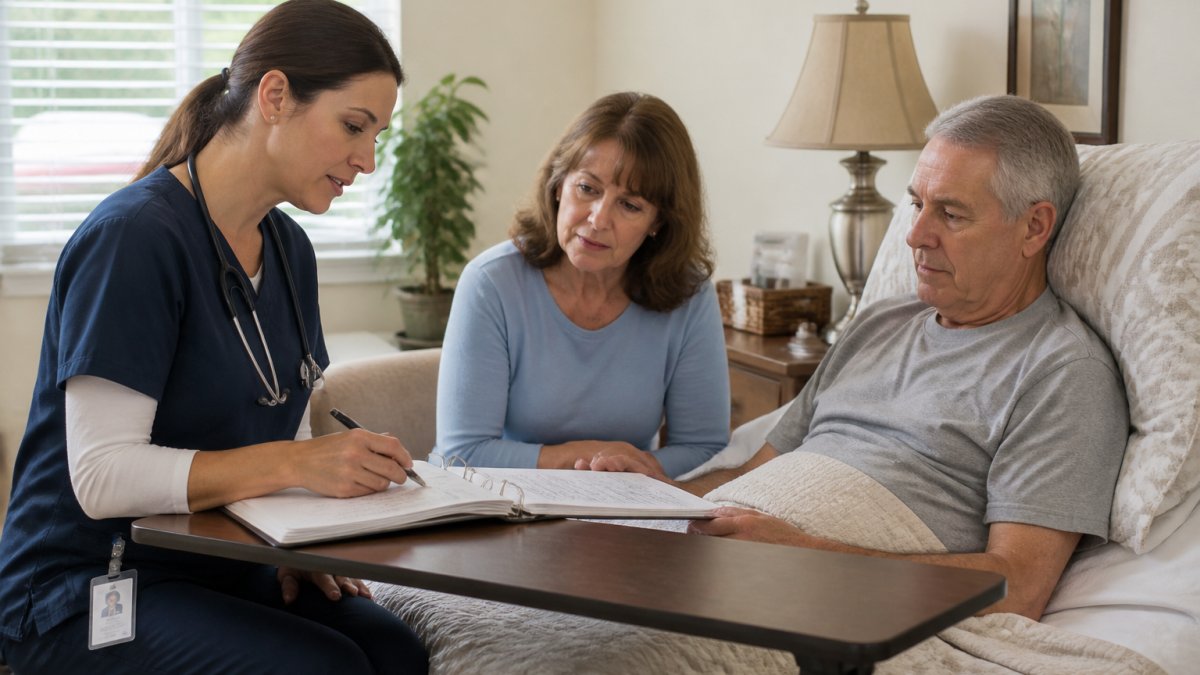
Clinical oversight becomes especially important when:
- Your loved one takes multiple medications
- They have wounds that need monitoring
- They’ve recently left the hospital
- They have a chronic condition like heart failure or diabetes
- Their cognitive abilities are declining
The RN acts as the quarterback. She knows what the doctor ordered, what the caregiver is actually doing, and whether the patient is responding well to the plan.
Why Clinical Oversight Matters for Your Loved One
Many families think home care means hiring someone to help with daily tasks. That’s true, but it’s incomplete. Without clinical oversight, small problems become big ones fast.
A caregiver might notice your mom is more confused than usual.
Clinical oversight prevents that. An RN trained to spot changes catches issues before they escalate. She knows what questions to ask. She documents what’s happening. She communicates with doctors.
Research on home care clients and care pathways shows that coordinated care leads to better outcomes for seniors managing chronic conditions at home.
Here’s what clinical oversight delivers: Learn about the key benefits of professional nursing oversight at home
- Medication safety: The RN reviews what your loved one takes and catches dangerous interactions
- Early problem detection: Changes in appetite, mood, mobility, or continence get flagged fast
- Caregiver confidence: Your caregiver knows exactly what to do and has someone to call with questions
- Doctor communication: The RN shares what’s actually happening at home, not just what your loved one reports in a clinic visit
- Peace of mind: You’re not wondering if your loved one is safe
For seniors in the Colleyville area with complex medical needs, clinical oversight transforms home care from a guessing game into a coordinated system. You’re not alone managing this.
RN Delegation in Home Care: How Nurses Guide Caregivers
RN delegation is the process where a registered nurse assigns specific nursing tasks to trained caregivers under the nurse’s supervision and accountability.
This is different from what a caregiver can do on their own. A caregiver can help with bathing, dressing, meals, and mobility.
In Texas, RN delegation is governed by the Texas Board of Nursing which sets clear rules about what can be delegated, how the caregiver must be trained, and what oversight looks like.
Here’s how delegation works in practice:
- The RN assesses your loved one and decides what tasks are needed
- The RN trains the caregiver step by step on how to do the task safely
- The RN watches the caregiver perform the task to confirm they can do it right
- The caregiver performs the task while the RN checks in regularly
- If something changes, the RN retrains or adjusts the plan
The key is that the RN doesn’t disappear. She’s accountable. If something goes wrong, it’s on her to figure out why and fix it.
For families in the Dallas-Fort Worth area, this means your loved one gets nursing-level care without a nurse in the home 24/7. Your caregiver can handle more complex needs because an RN is backing them up.
Learn more about how delegation works in your loved one’s specific situation.
Developing a Home Care Nursing Care Plan
A nursing care plan is a written document that outlines your loved one’s health needs, the goals of care, and the specific actions caregivers will take to meet those needs. It’s the roadmap for everything that happens in the home.
The RN creates this plan after a thorough assessment. She asks questions. She reviews medical history. She watches how your loved one moves, thinks, and functions day to day. Then she writes down what she sees and what needs to happen.
A good care plan includes:
- Current health conditions and medications
- Specific tasks the caregiver will do (and how to do them)
- Warning signs to watch for
- When to call the doctor
- How often the RN will check in
- Goals (like “keep wound clean and dry” or “prevent falls”)
The plan isn’t theoretical. It’s practical. A caregiver should be able to pick it up and know exactly what to do.
At Care Crew LLC, we work with families to make sure the care plan matches your loved one’s actual life. We ask what matters most. We listen to what’s been tried before.
Explore a detailed guide to nursing care plans to understand what should be in yours.
Clinical Oversight After Hospital Discharge
Hospital discharge is a vulnerable time. Your loved one spent days or weeks in a controlled environment where nurses monitored them constantly. Then they come home. Suddenly, there’s no one watching.
This is where understanding what is clinical oversight in home care becomes most critical. The first few weeks after discharge are when readmissions happen. Infections develop. Medications get confused. Falls occur.
An RN doing clinical oversight catches these problems. She:
- Reviews the discharge paperwork and makes sure you understand it
- Coordinates with the hospital and the doctor
- Sets up the home to be safe
- Trains the caregiver on new tasks (if any)
- Visits more frequently in the first weeks
- Watches for signs that something isn’t working
Many families don’t realize they need this level of support. They think as long as someone is there to help, it’s fine. But post-discharge is different. Your loved one is fragile.
Research on transitional care emphasizes that coordinated oversight during this period reduces complications and helps seniors recover faster.
If your loved one is coming home from the hospital in the Colleyville area, clinical oversight should start before they leave. The RN should be part of the discharge planning conversation.
Get guidance on managing the transition from hospital to home with clinical support.
Recognizing Signs a Senior’s Care Plan Needs Updating
Care plans aren’t set it and forget it. Your loved one changes. Their needs shift. What worked three months ago might not work now.
Watch for these signs that the plan needs updating:
- New or worsening pain
- Changes in appetite or weight
- Increased confusion or memory loss
- Falls or near-falls
- Difficulty with tasks they used to handle
- New medications from the doctor
- Changes in mood or behavior
- Wounds that aren’t healing
- Difficulty sleeping
When you notice something different, tell the RN. Don’t wait for the next scheduled visit. The RN’s job is to adjust the plan as your loved one’s situation evolves.
Sometimes the change is small. Maybe your loved one needs a different chair to sit in. Maybe the caregiver needs a refresher on a particular task. Sometimes it’s bigger. Maybe your loved one needs more help with mobility. Maybe a new medication is causing side effects.
The RN figures this out by asking questions and observing. Then she updates the plan and retrains the caregiver if needed.
This is why the relationship between your family and the RN matters. If you’re comfortable speaking up, changes get caught early. If you feel like you’re bothering the nurse by reporting small things, problems pile up.
| Change Observed | What It Might Mean | What to Do |
|---|---|---|
| Increased confusion | Infection, medication issue, or progression of dementia | Contact RN immediately |
| Weight loss | Not eating enough or swallowing problem | Tell RN at next visit or sooner if significant |
| New pain | Injury, infection, or worsening condition | Report to RN and doctor |
| Difficulty with stairs | Declining strength or balance | RN may recommend home modifications |
| Withdrawn behavior | Depression, pain, or feeling unwell | Discuss with RN and consider counseling |
Starting Clinical Oversight for Your Home Care Needs
If you’re considering clinical oversight for your loved one, start by having a clear conversation about what they need.
Do they have complex medical needs? Are they managing multiple conditions? Did they just leave the hospital? Are they on medications that need careful monitoring?
Next, find an RN or home care agency that offers it. Not all home care is the same. Some agencies send caregivers but have no RN involvement. Others have RNs available but don’t do regular oversight.
Ask these questions:
- How often will the RN visit?
- What does the RN do during a visit?
- How do I reach the RN if I have questions between visits?
- What happens if my loved one’s condition changes?
- How does the RN communicate with my loved one’s doctors?
- What training do the caregivers receive?
Care Crew LLC provides RN delegation and clinical oversight specifically designed for seniors with complex needs in the Dallas-Fort Worth area. We coordinate with your loved one’s doctors. We train caregivers thoroughly. We check in regularly.
RN-delegated care for seniors in the Colleyville area starts with a conversation about what your loved one needs and what matters most to your family. From there, we build a plan that works.
Frequently Asked Questions
What does clinical oversight mean in home care?
Clinical oversight in home care refers to the supervision and guidance provided by a registered nurse to ensure safe, quality care is delivered in a patient’s home. This includes assessing patient needs, creating care plans, delegating nursing tasks to caregivers, monitoring progress, and coordinating with other healthcare providers. Clinical oversight ensures continuity of care and protects patient safety when professional nursing is not present 24/7.
How does RN delegation in home care work?
RN delegation involves a registered nurse assessing what tasks a caregiver can safely perform and providing clear instructions on how to complete them. The nurse remains responsible for supervising the delegated task and the caregiver’s performance. Delegated tasks may include medication reminders, wound care assistance, mobility support, and monitoring for changes in the patient’s condition. Regular check-ins and documentation ensure accountability and patient safety.
When should a family ask for a nursing assessment at home?
Request a nursing assessment when your loved one is transitioning home from the hospital, experiencing a change in their medical condition, starting new medications, showing signs of confusion or behavioral changes, or when current caregivers report difficulty managing care tasks. An assessment helps identify gaps in the care plan, clarify what support is needed, and ensure all caregivers understand how to safely assist with medical or personal care needs.
What is the difference between home care and home health care?
Home care typically includes non-medical personal care like bathing, dressing, meal preparation, and companionship, often provided by certified nursing assistants or personal care aides. Home health care involves skilled nursing services, physical therapy, occupational therapy, or other medical interventions ordered by a physician. Clinical oversight is central to home health care because it coordinates skilled nursing tasks and ensures medical safety, whereas home care may operate with less direct nursing supervision.
Clinical oversight isn’t a luxury. It’s a safety system. When your loved one has complex medical needs or is navigating a major transition, having an RN coordinating their care prevents problems and gives your family confidence. If you’re managing home care for a senior in the Dallas-Fort Worth area, ask whether clinical oversight is part of the plan. It often makes the difference between care that works and care that creates stress.
