
Last Updated: October 23, 2026
Quick Summary
Professional nursing oversight means a registered nurse reviews medications, trains and supervises caregivers, and coordinates care with physicians, the pharmacy, and therapists. It reduces medication errors and hospital readmissions, and in Texas it includes RN delegation under the Texas Board of Nursing RN Delegated Task Rules. Families get one clinical point of contact instead of five phone numbers.
- A registered nurse reviews the full medication list and checks for dangerous interactions.
- RN delegation in Texas lets a nurse assign specific nursing tasks to an unlicensed caregiver while retaining responsibility.
- Home health care is skilled medical care often covered by Medicare; home care is non-medical support.
- Nursing oversight is private pay and sits between home health care and home care.
- Ask for the supervising nurse’s name and role before you sign anything.
Table of Contents
- 1. Safer Medication Management and Fewer Errors
- 2. Lower Risk of Hospital Readmissions After Discharge
- 3. RN Delegation in Texas: Caregivers Who Are Properly Trained and Supervised
- 4. Home Care Nurse Supervision That Catches Problems Early
- 5. Care Coordination for Seniors at Home: One Point of Contact
- 6. Home Health Care vs. Home Care: Where Nursing Oversight Fits
- 7. Peace of Mind for Families and Better Quality of Life
- Frequently Asked Questions
1. Safer Medication Management and Fewer Errors
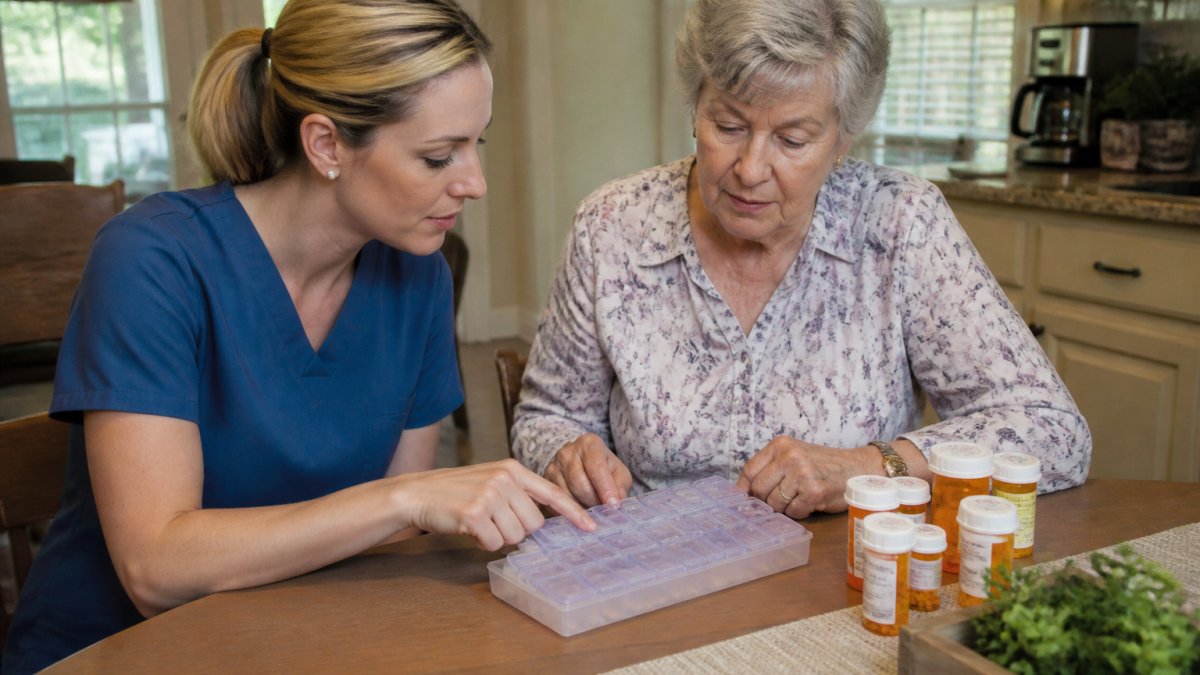
Medication errors are one of the most common and preventable risks for seniors living at home, especially when multiple prescriptions and caregivers are involved. Professional nursing oversight puts a trained clinical eye on every pill, dose, and schedule. (Source: The Centers for Medicare & Medicaid Services (CMS) reports that hospital readmissions within 30 days of discharge can be significantly reduced with proper post-discharge care coordination and patient education.)
A registered nurse reviews the full medication list, checks for dangerous interactions, and confirms that each prescription is taken at the right time and in the right amount. When caregivers handle medications, the nurse trains them on what to watch for and how to document each dose. That paper trail matters: it gives the family and the physician a clear record if something changes.
At Care Crew LLC, we build medication routines into the care plan from day one, because this is where small mistakes become hospital trips. A common mistake families make is assuming a pill organizer solves the problem. It doesn’t. It organizes pills; it doesn’t catch a duplicate prescription from two different doctors.
2. Lower Risk of Hospital Readmissions After Discharge
The weeks right after a hospital discharge are the riskiest part of recovery. Instructions get lost, follow-up appointments slip, and warning signs go unnoticed until a return trip to the emergency room.
Nursing oversight closes that gap. A nurse reviews discharge orders, confirms the home is set up for recovery, and monitors for the symptoms that signal trouble. Caregivers receive clear direction on what to report and when to escalate.
This is the practical difference between hoping recovery goes well and managing it. Families who bring in oversight early tend to catch problems while they are still small.
3. RN Delegation in Texas: Caregivers Who Are Properly Trained and Supervised
RN delegation in Texas is the legal process that allows a registered nurse to assign specific nursing tasks to an unlicensed caregiver, with the nurse retaining responsibility for training and supervision. It is not a workaround; it is a regulated framework under the Texas Board of Nursing RN Delegated Task Rules.
That framework matters because it protects the person receiving care. The nurse assesses the client, decides which tasks can safely be delegated, trains the caregiver, and monitors performance over time. Caregivers are not left guessing.
Families often tell us their previous agency sent caregivers with no clinical backup at all. That is the gap delegation fills. When a task is delegated properly, there is a licensed professional accountable for how it is carried out, and a clear process if something goes wrong.
Skipping formal delegation and letting an untrained caregiver handle nursing tasks exposes the family and the agency to real risk. The task may look simple, but without nurse training and supervision, there is no one accountable when it goes wrong.
4. Home Care Nurse Supervision That Catches Problems Early
Home care nurse supervision is the scheduled, ongoing review of a client’s condition and care by a registered nurse. It turns scattered observations into a clinical picture that someone qualified is actually reading.
Small changes matter: a new wobble in walking, a skipped meal, a mood shift, a wound that looks slightly different. A caregiver may notice one of these but not connect it to anything. A supervising nurse sees the pattern and acts on it.
Supervision also keeps caregivers sharp. Regular check-ins, documented visits, and clear reporting expectations mean the caregiver knows someone is reviewing their work. In practice, that raises the standard of care without adding stress to the family.
5. Care Coordination for Seniors at Home: One Point of Contact
Care coordination for seniors at home means one clinical contact who talks to the physicians, the pharmacy, the therapists, the caregivers, and the family. Instead of five phone numbers and no clear owner, there is one.
That single point of contact saves families enormous time and worry. Questions about a new prescription, a therapy schedule, or a change in condition go to someone who already knows the full picture. Information stops falling between providers.
For adult children managing a parent’s care from a distance or around a full-time job, this is often the benefit they notice first. You are not the switchboard anymore. You are the family, and someone else is holding the clinical thread.
6. Home Health Care vs. Home Care: Where Nursing Oversight Fits
Home health care and home care are not the same service, and knowing the difference helps families ask for the right thing. Home health care is skilled medical care, typically ordered by a physician and often covered by Medicare for a qualifying period. Home care is non-medical support with daily living: bathing, dressing, meals, companionship, and supervision.
Nursing oversight sits between them. It brings clinical supervision to a home care arrangement, so caregivers handling delegated tasks are trained and monitored by a nurse. It also supports the transition when skilled home health services end but needs remain.
Many families discover this distinction only after a discharge planner uses the word “transitional care” and moves on. Ask directly: who is supervising the caregiver, and what happens when a medical question comes up at night?
| Service Type | What It Covers | Who Supervises | Typical Payer |
|---|---|---|---|
| Home health care | Skilled nursing, therapy, wound care | Physician-ordered agency | Medicare, insurance |
| Home care | Bathing, meals, companionship, supervision | Agency, often non-clinical | Private pay |
| Nursing oversight | RN delegation, monitoring, care coordination | Registered nurse | Private pay |
7. Peace of Mind for Families and Better Quality of Life
The last benefit is the one families feel every day: relief. When a nurse is overseeing care, the family stops second-guessing every decision and starts being family again.
Clients notice it too. Consistent, supervised care helps people stay in their own homes longer, with dignity and routine intact. That is the goal we work toward at Care Crew LLC, and it is why we coordinate closely with hospice teams and physicians when a loved one’s needs change.
If you are searching for nursing oversight near me in Colleyville or the wider DFW area, the right questions are simple: who is the supervising nurse, how often do they visit, and how do I reach them? The answers tell you everything.
Ask for the supervising nurse’s name and role before you sign anything. An agency that cannot name a clinical supervisor is not providing oversight, no matter what the brochure says.
Families across Colleyville and the Dallas-Fort Worth area deserve care they can trust, and that starts with clinical accountability at home. Care Crew LLC provides professional nursing oversight, RN delegation under the Texas Board of Nursing RN Delegated Task Rules, and personalized care coordination for complex needs, including hospice support and hospital transitions. Our team is owned and operated by medical professionals with over 20 years of industry experience. Call Care Crew LLC today to talk through your family’s situation and build a care plan that fits.
Frequently Asked Questions
What does professional nursing oversight at home include?
Professional nursing oversight at home typically includes an initial assessment of the client’s medical needs, development of an individualized care plan, medication management review, and ongoing monitoring of health status. A registered nurse may also delegate specific tasks to caregivers under state rules, supervise their performance, and coordinate with physicians, therapists, and family members. The goal is to keep care safe and consistent between medical appointments while helping the client remain at home.
What is the difference between home health care and nursing oversight?
Home health care usually refers to skilled medical services ordered by a physician after an illness or hospital stay, such as wound care, physical therapy, or skilled nursing visits, and is often covered by Medicare for a limited time when eligibility criteria are met. Nursing oversight is an ongoing layer of clinical supervision that can continue beyond a home health episode, helping manage chronic conditions, supervise caregivers, and coordinate care. The two can work together, and the right mix depends on the person’s needs.
Can a registered nurse delegate tasks to a caregiver in Texas?
Yes. Under the Texas Board of Nursing RN Delegated Task Rules, a registered nurse can delegate certain nursing tasks to unlicensed caregivers when the nurse determines it is safe and appropriate for that specific client. The nurse must assess the client, train and verify the caregiver’s competence, and provide ongoing supervision. This allows families to receive help with tasks like medication reminders or certain personal care while keeping clinical accountability with the RN.
Who may benefit from professional nursing oversight at home?
People with chronic conditions such as diabetes, heart failure, or dementia often benefit, as do those recovering from a hospital stay or managing multiple medications. Families who rely on caregivers for daily support may also benefit from the supervision and coordination an RN provides. Veterans navigating VA benefits and families facing hospice or end-of-life care can use nursing oversight to keep everyone informed and aligned. A conversation with a care coordinator can clarify whether it fits a specific situation.
