
Table of Contents
- Understanding Aggressive Dementia Behaviors
- Identifying Dementia Behavior Triggers
- How to Calm Someone With Dementia
- Dementia Caregiver Safety: Protecting Yourself
- Creating a Safe Home Environment
- When to Bring in Professional Home Care Support
- Frequently Asked Questions
Last Updated: October 7, 2026
Understanding Aggressive Dementia Behaviors
Aggressive behavior in dementia patients is a serious challenge that many family caregivers face. Home care for aggressive dementia patients requires patience, training, and a clear understanding of what’s driving the behavior. At Care Crew LLC, we work with families in Colleyville and throughout the Dallas-Fort Worth area who are managing these difficult situations at home.
Aggression in dementia isn’t personal. It’s a symptom. When someone with dementia becomes aggressive, they’re often scared, confused, or in pain. They may not recognize you or understand what’s happening around them. This fear and confusion can lead to hitting, yelling, or pushing.
Understanding this difference changes everything. Instead of taking the behavior personally, you can start looking for the root cause. That’s where real progress begins.
Common aggressive dementia behaviors include:
- Hitting or pushing caregivers
- Yelling or verbal aggression
- Throwing objects
- Resisting personal care or bathing
- Combative responses to help
Aggressive behavior in dementia is a symptom of fear, confusion, or pain, not a choice or personal attack. Treating it as a medical issue, not a behavioral problem, opens the door to real solutions.
Identifying Dementia Behavior Triggers
What sets off aggression in one person may not affect another. Finding the specific triggers for your loved one is essential for managing home care for aggressive dementia patients effectively.
Common triggers include:
- Pain or discomfort, Undiagnosed pain, constipation, or infection can cause sudden aggression
- Overstimulation, Too much noise, too many people, or too many activities happening at once
- Feeling rushed, Pushing someone to shower or eat faster than they’re comfortable with
- Unfamiliar caregivers, New faces can trigger fear and resistance
- Environmental changes, Moving furniture, changing routines, or being in unfamiliar places
- Hunger or thirst, Basic needs that go unmet can escalate behavior
- Fatigue, Tiredness often makes aggression worse, especially late in the day
- Loss of control, Feeling powerless in decisions about their own care
Keep a simple log for one week. Write down when aggression happens, what was happening before it, and what seemed to calm the person down. You’ll likely spot a pattern.
The most overlooked trigger is pain. Ask your loved one’s doctor about a pain assessment. Untreated pain drives more aggression than almost any other single factor. If your loved one can’t communicate pain verbally, watch for grimacing, guarding certain body parts, or sudden behavior changes.
How to Calm Someone With Dementia
When aggression happens, your response matters. Staying calm is the hardest part, but it’s also the most important. Your anxiety feeds theirs.
In the moment:
- Keep your voice low and slow. Speak like you’re talking to a friend, not a patient.
- Step back and give space. Crowding someone who’s agitated makes it worse.
- Don’t argue or correct them. If they think it’s 1985, arguing won’t help. Redirect instead.
- Use simple sentences. “Let’s sit down” works. “We need to discuss your medication schedule” doesn’t.
- Avoid sudden movements. Move slowly and let them see your hands.
Redirect, don’t confront:
- If they want to leave, walk with them instead of blocking the door
- If they’re upset about something that didn’t happen, don’t debate it, acknowledge their feeling: “I see you’re upset”
- Change the activity. Move to a different room, turn on music, or offer a snack
Physical techniques for de-escalation:
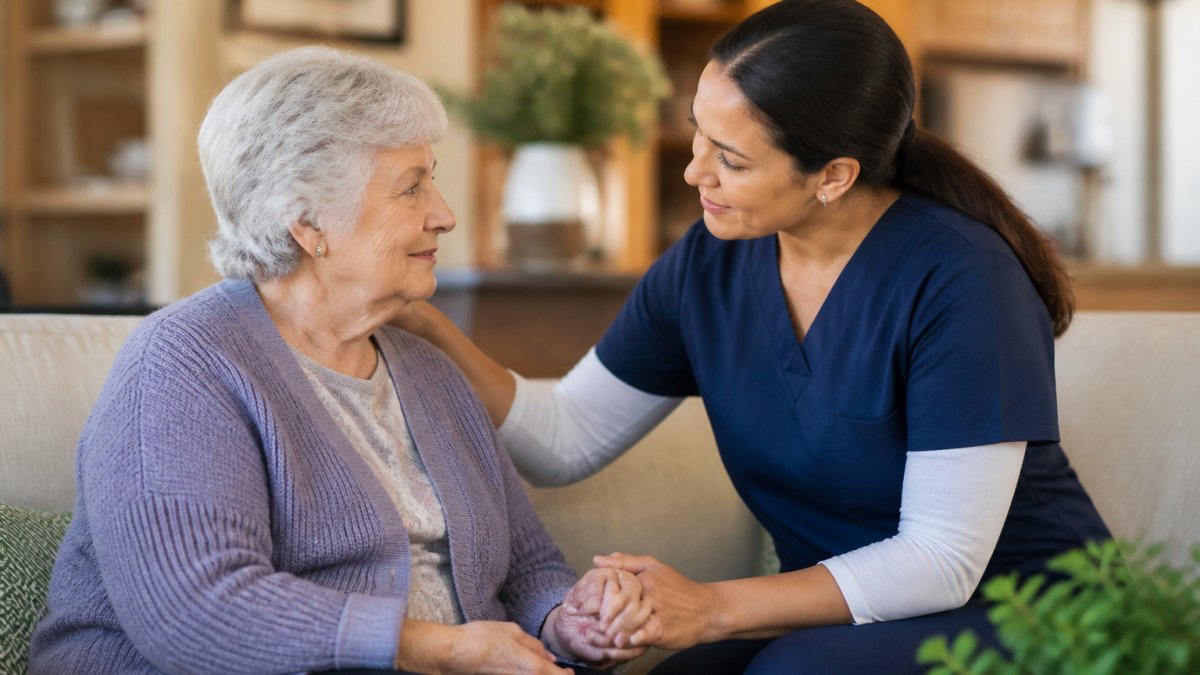
- Use gentle touch on the arm or shoulder if they’re comfortable with it
- Offer a hand to hold
- Sit at their level rather than standing over them
Research shows that gentle touch and a calm voice reduce aggressive episodes by creating a sense of safety. But only use touch if the person has previously been comfortable with it.
After the episode passes, don’t rehash it. Your loved one may not remember it happened. Move forward without blame or shame.
Dementia Caregiver Safety: Protecting Yourself
Aggressive dementia patients can hurt caregivers. That’s not a failure on anyone’s part, it’s a reality that requires planning.
Your safety comes first. You cannot care for someone if you’re injured, burned out, or traumatized by the experience.
Protect yourself physically:
- Never position yourself where someone can trap you in a corner
- Keep furniture arranged so you have a clear exit path
- Remove hard objects from reach if aggression is physical
- Wear comfortable shoes so you can move quickly if needed
- Consider padding on bed rails or sharp furniture edges if falls are a concern (Source: National Institute on Aging)
Protect your mental health:
- Take breaks. Aggressive behavior is exhausting. You need rest.
- Don’t blame yourself. This is the disease, not your failure as a caregiver.
- Talk to someone. A therapist, support group, or trusted friend helps.
- Set boundaries. You can’t fix dementia, and you’re not responsible for preventing every difficult moment.
Know when to call for help:
- If aggression is escalating and you feel unsafe, call 911
- If you’re injured, seek medical attention
- If you’re having thoughts of harming yourself or your loved one, contact a crisis line immediately
Many family caregivers try to handle everything alone until they break. Professional support isn’t failure, it’s wisdom. Care Crew LLC helps families in Colleyville and the surrounding area coordinate professional caregivers who have training in dementia care and de-escalation techniques. Having trained support in your home reduces your stress and gives your loved one consistent, skilled care.
Caregiver burnout is real and dangerous. Studies show that family caregivers of dementia patients experience depression and anxiety at higher rates than the general population. If you’re struggling emotionally, reach out to your doctor or a mental health professional. Your wellbeing matters.
Creating a Safe Home Environment
The physical space where your loved one lives shapes their behavior. A chaotic, confusing environment triggers aggression. A calm, predictable one reduces it.
Simplify the space:
- Remove clutter and extra furniture
- Keep lighting bright and consistent (dim lighting increases confusion and fear)
- Remove mirrors if your loved one becomes agitated by their own reflection
- Lock up medications, cleaning supplies, and anything dangerous
- Remove or secure items they might trip on
Establish routine:
- Same wake time, meal times, and bedtime each day
- Consistent caregiver when possible (this is huge, changing caregivers constantly increases aggression)
- Predictable activities help the brain feel safe
- Avoid sudden changes to the environment
Reduce triggers in the home:
- Lower noise levels, TV, radio, and background noise add stress
- Limit visitors if crowds trigger agitation
- Keep the temperature comfortable
- Ensure the bathroom is accessible and safe for bathing (this is often where aggression happens)
Make personal care easier:
- Gather everything you need before starting (clothes, toiletries, towels)
- Let them choose between two options rather than having decisions forced on them
- Allow extra time, rushing causes resistance
- Respect dignity, close doors, use privacy, and explain what you’re doing
A safe home environment isn’t just about preventing falls. It’s about creating a place where your loved one feels calm and in control of what they can control.
When to Bring in Professional Home Care Support
You don’t have to do this alone. Professional home care for aggressive dementia patients is designed specifically for situations like yours.
Signs you need professional support:
- Aggression is increasing or becoming physical
- You’re exhausted and running on empty
- You’ve missed work or neglected your own health
- Your loved one needs more help than you can safely provide
- You’re afraid of what might happen if you lose your temper
Professional caregivers bring several advantages. They have training in dementia-specific de-escalation. They can provide consistent care, which reduces confusion and aggression. They give you a break, which protects your mental health. And they work under the supervision of nurses who can identify medical issues like pain or infection that might be driving the behavior.
In Colleyville and throughout the Dallas-Fort Worth area, Care Crew LLC coordinates professional home care with clinical oversight. We work with your loved one’s doctor to create a care plan that addresses the root causes of aggression. Our team includes caregivers trained in dementia care and nurses who can monitor for medical issues that family caregivers might miss.
If your loved one is a veteran, we also help navigate VA benefits that may cover in-home care costs. Many families don’t realize these benefits exist, and we can help you understand what’s available.
The transition to professional care doesn’t mean you’re failing. It means you’re being smart about getting the right support.
Managing home care for aggressive dementia patients is one of the hardest things a family can face. The behavior isn’t personal, but the impact on you is real. When you’re at your limit, when aggression is escalating, when you’re exhausted, or when you need someone with specialized training, professional support makes a difference. At Care Crew LLC, we’ve helped families in Colleyville and the Dallas-Fort Worth area navigate these exact situations. Our nurses provide clinical oversight, our caregivers have dementia-specific training, and we coordinate care plans tailored to your loved one’s needs. If you’re struggling, reach out. We’re here to help. Contact Care Crew LLC for a consultation
Frequently Asked Questions
What causes aggression in people with dementia?
Aggressive dementia behaviors often stem from confusion, fear, pain, or difficulty communicating. As the disease progresses, people with dementia may not recognize their environment or caregivers, triggering a fight-or-flight response. Unmet needs like hunger, discomfort, or the need to use the bathroom can also spark aggression. Understanding the root cause helps you respond with compassion rather than taking the behavior personally.
How can you care for someone with aggressive dementia at home?
Home care for aggressive dementia patients requires patience, consistency, and a calm environment. Establish routines, speak in simple, reassuring language, and give the person space when they’re upset. Remove potential triggers, ensure adequate lighting and familiar surroundings, and address physical needs promptly. Professional in-home caregivers trained in dementia care can provide support, allowing family members to rest and reducing stress on both the patient and the household.
When is home care no longer safe for someone with dementia?
Home care may become unsafe if the person poses a serious danger to themselves or others, requires 24/7 skilled nursing care, or if family caregivers are experiencing burnout that affects care quality. Signs include frequent falls, wandering that cannot be managed, severe aggression that injures caregivers, or complex medical needs beyond what home support can address. A professional care assessment can help determine whether continuing at home is feasible or whether a facility-based setting is necessary.
What should caregivers do if a person with dementia becomes violent?
Stay calm, step back to create space, and avoid restraining the person unless they pose immediate danger. Speak softly and use simple language. Do not argue or try to reason during an episode. Remove triggers if possible, redirect their attention, and wait for the behavior to pass. If you are injured or feel unsafe, leave the room and call for help. Professional caregivers are trained in de-escalation techniques and can provide guidance on managing specific situations safely.